

Better data, better visibility. AI that eliminates telemetry quality issues.
The problem
The telemetry quality challenge
Low-quality telemetry directly drives up MTTD and MTTR. Incomplete fields, inconsistent naming, and noisy signals delay detection, confuse alerts, and stretch every incident. Yet achieving high-quality telemetry across an organization is difficult. Developers are measured on features, not instrumentation. As telemetry volume grows, these gaps multiply, creating fragmented standards and “best effort” data that can’t keep pace with change, unless you give teams a clear, enforced framework for telemetry quality.
MTTD and MTTR
Unstructured data, missing fields, and a lack of context slow MTTD and MTTR, making it hard to reconstruct what actually happened when issues arise.
Enforcement overhead
Enforcing high-quality telemetry drains DevOps and engineering time, demands ongoing standards enforcement, and slows feature delivery.
Unreliable AI analysis
Agents lack human intuition; when telemetry is noisy, incomplete, or inconsistent, their decisions become more fragile, less trustworthy, and higher-risk.

The solution
Agentic telemetry management that improves data quality
Sawmills agent - Mills - analyzes your telemetry in real time and automatically identifies malformed, redundant, inconsistent, or low-value data. It recommends the right action — transformation, parsing, enrichment, or deduplication — so you can turn noisy telemetry into clean, structured, high-signal data without code changes.

AI Quality Control
The Mills agent detects low-value telemetry data in real time and provides tailored recommendations for improvement that you can apply in Slack or Teams.

One-Click Optimizations
Apply telemetry quality recommendations to your pipeline in a single click or in existing developer workflows—no code changes, redeploys, or chasing engineers.

Unstructured-to-Structured Logs
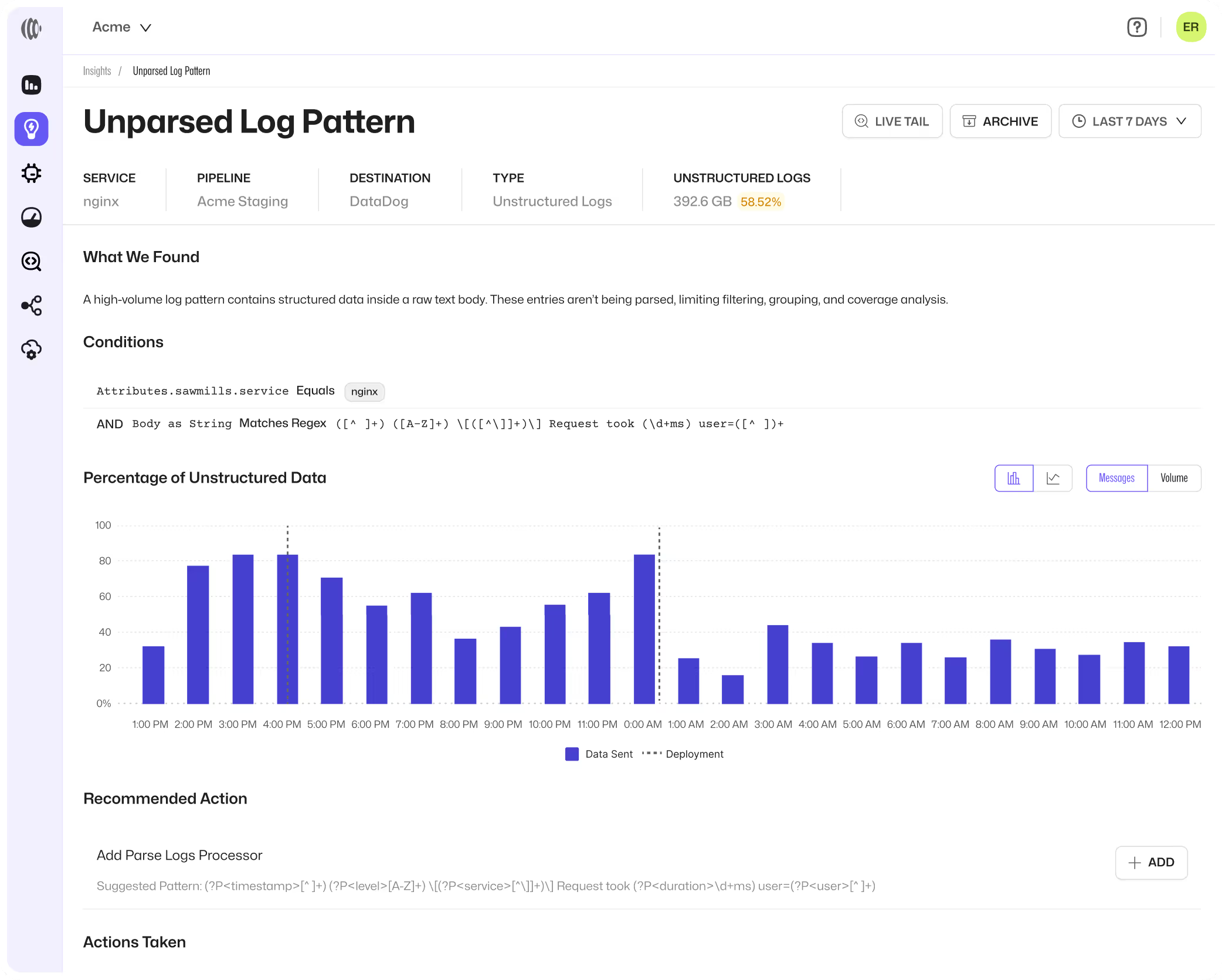
Identify unstructured log patterns and automatically generate schemas to convert them into structured fields.

Transform Telemetry
Reshape your data as it flows so that telemetry arrives in your backend, clean, structured, and ready for analysis.

Apply Enrichments
Enrich with attributes and metadata to boost visibility, speed up troubleshooting, and fill context gaps.

Log-to-Metric
Convert high-volume logs into lightweight metrics to improve trend analysis, dashboarding, and issue detection.
Real savings, real fast
“Sawmills has set us on a path toward optimizing our telemetry data, paving the way for streamlined cost and improved resource alignment.”


FAQs
Questions? We have answers
How does Sawmills improve telemetry quality?

Sawmills analyzes telemetry in real time, detecting issues like unstructured logs, missing fields, noisy patterns, malformed data, and runaway cardinality—and automatically recommends fixes you can apply with a single click.
Will this disrupt our existing observability tools?
Not at all. Sawmills works alongside your current stack (Datadog, New Relic, Splunk, Grafana, etc.) and improves the quality of the data going into those tools.
What happens to data we filter or de-prioritize?
Low-value logs can be routed to object storage like S3 and rehydrated any time for investigations or compliance.
Will Sawmills break our alerts?
No. By improving data consistency and reducing noise, Sawmills actually makes alerts more stable and accurate.
Can Sawmills detect malformed or broken telemetry?
Yes. It flags missing fields, invalid JSON, mismatched timestamps, misconfigured emitters, and other quality issues as they occur.
How hard is Sawmills to deploy?
Setup takes minutes. Once connected, Sawmills begins analyzing telemetry immediately and recommending quality improvements in real time.
Start transforming your telemetry data
Sawmills AI transforms telemetry quality management, improving visibility and reducing costs and the reliability issues of your observability platform.
